
The Art of Perfecting Sourdough: Tips and Techniques for Beginners

Sourdough baking has become a popular hobby for many home bakers, offering a rewarding way to create bread with rich flavor and a satisfying crust. Yet, beginners often find sourdough intimidating due to its natural fermentation process and the patience it requires. This guide breaks down essential tips and techniques to help you master sourdough baking, turning your kitchen into a small artisan bakery.
Understanding Sourdough Starter

The heart of sourdough bread is its starter, a natural culture of wild yeast and bacteria. Unlike commercial yeast, a starter develops slowly and gives sourdough its distinctive tangy flavor.
Creating your starter: Mix equal parts flour and water and let it sit at room temperature. Feed it daily with fresh flour and water to encourage yeast growth.
Signs of readiness: Look for bubbles on the surface and a pleasant, slightly sour smell. This usually takes about 5 to 7 days.
Maintaining your starter: Keep it in the fridge if you bake less often, feeding it weekly. For frequent baking, store it at room temperature and feed it daily.
Consistency in feeding and temperature control are key to a healthy starter that will give your bread good rise and flavor.
Choosing the Right Ingredients
Sourdough relies on simple ingredients, but their quality affects the final loaf.
Flour: Use unbleached bread flour or a mix of bread and whole wheat flour for better fermentation and texture.
Water: Use filtered or bottled water if your tap water is heavily chlorinated, as chlorine can inhibit yeast activity.
Salt: Adds flavor and controls fermentation speed. Use fine sea salt or kosher salt for even distribution.
Avoid adding sugar or commercial yeast, as they can disrupt the natural fermentation process.
Mastering the Dough
The dough’s texture and handling influence the bread’s crumb and crust.
Hydration level: A higher water content (around 70-80%) creates an open crumb with large holes but can be sticky and harder to handle.
Mixing: Combine ingredients until just mixed, then let the dough rest (autolyse) for 30 minutes to an hour to improve gluten development.
Kneading and folding: Instead of traditional kneading, use stretch and fold techniques every 30 minutes during the first 2 hours of fermentation to strengthen the dough.
Pay attention to dough feel rather than strict timing. It should be elastic but not overly sticky.
Fermentation and Proofing
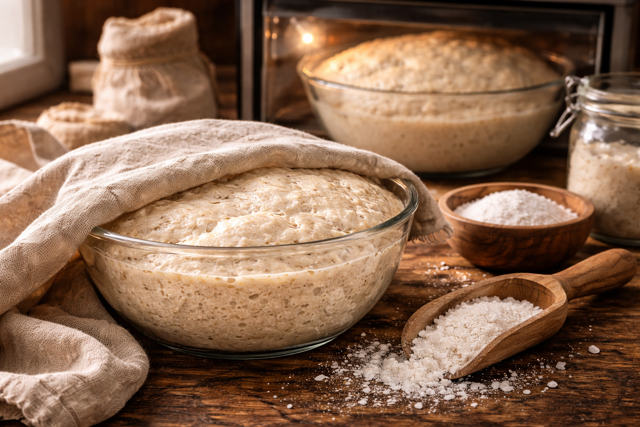
Fermentation is where flavor and texture develop. It requires patience and observation.
Bulk fermentation: Let the dough rise at room temperature until it roughly doubles in size. This can take 3 to 6 hours depending on temperature and starter strength.
Shaping: Gently shape the dough into a tight ball or oval to create surface tension, which helps the bread rise evenly.
Final proof: Proof the shaped dough in a banneton or bowl lined with a floured towel. Refrigerate overnight for a slow, cold fermentation that enhances flavor and makes scoring easier.
Watch for signs like dough that springs back slowly when poked, indicating it’s ready to bake.
Baking Techniques
Baking sourdough requires creating steam and high heat to achieve a crisp crust and good oven spring.
Preheat your oven: Heat to 230°C (450°F) with a Dutch oven or baking stone inside.
Scoring: Use a sharp blade to make shallow cuts on the dough surface. This controls expansion and adds an artisan look.
Steam: Bake with the lid on your Dutch oven or add water to a hot tray in the oven to create steam. Remove the lid halfway through baking to brown the crust.
Baking time: Typically 30 to 40 minutes. The bread should sound hollow when tapped on the bottom.
Let the bread cool completely on a wire rack before slicing to finish the cooking process and avoid a gummy crumb.
Troubleshooting Common Issues
Even experienced bakers face challenges. Here are solutions to frequent problems:
Dense bread: Starter may be weak or underfed, or fermentation too short. Feed starter regularly and allow longer bulk fermentation.
Flat loaf: Dough may be over-proofed or shaped loosely. Shape tightly and watch proofing times.
Sour flavor too strong: Reduce fermentation time or proof in the fridge to slow acid production.
Crust too hard or pale: Bake longer or increase oven temperature slightly. Ensure steam is present during the first part of baking.
Keep notes on each bake to track what works best with your environment and ingredients.
Final Thoughts on Sourdough Baking
Sourdough baking is a journey that combines science and art. Each loaf teaches you more about timing, texture, and flavor. By nurturing your starter, choosing quality ingredients, and practicing dough handling and baking techniques, you will create bread that delights with every bite. Start small, be patient, and enjoy the process of turning simple ingredients into something truly special.

Comments